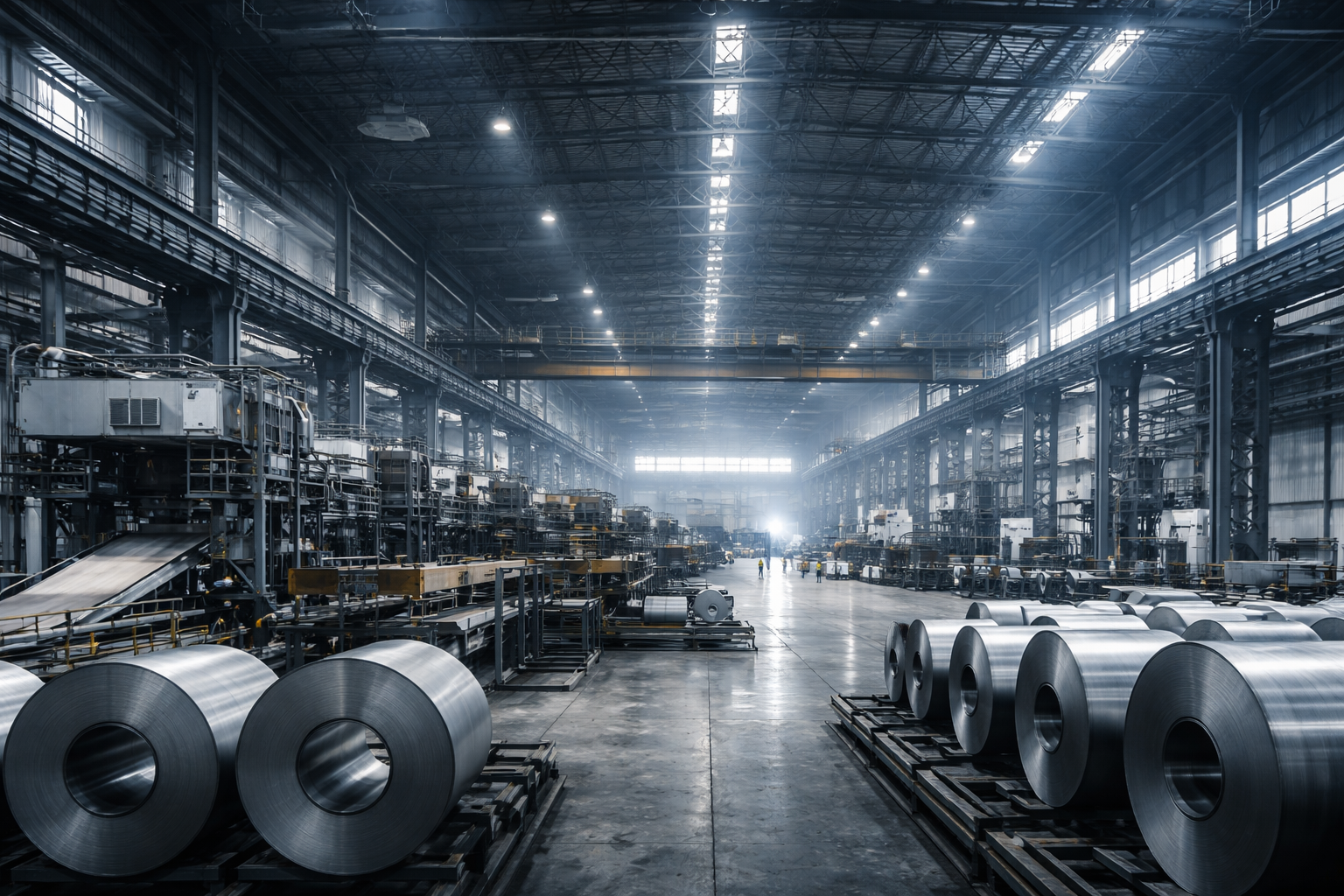
Exoskeletons in a metal fabrication plant:
what we saw, what we solved
Laser cutting steel, grinding aluminum parts, operating a press brake, packing finished pieces into deep shipping crates — metal fabrication concentrates just about every known musculoskeletal disorder risk factor into a single shift. I recently visited a Quebec plant manufacturing precision steel and aluminum components. Here’s what I saw, and more importantly, what we put in place to protect their teams.
My work as an integrator always starts the same way: I put on my safety boots, grab my PPE, and walk the floor. Not to sell a particular exoskeleton — but to understand what workers are actually going through, where the physical strain is coming from and why. On-site posture analysis is the heart of the process. It’s what separates choosing the right equipment from wasting a health and safety budget.
The company I visited — whose name I’m deliberately keeping confidential — manufactures precision parts in steel and aluminum for industrial clients. A few dozen workers on the floor, heavy machinery, sustained production rates. Demanding trades, repetitive motions, and a workplace where musculoskeletal disorders are a daily reality — not an exception.
These numbers come from the CNESST for the durable goods manufacturing sector as a whole — the category that includes metallurgy, metal transformation, and precision machining. Zoom out to the national level and the picture is just as sobering: Canada recorded nearly 349,000 accepted lost-time injury claims in 2022, with manufacturing consistently ranking among the top contributing sectors after health care.
Station 1 — Laser cutting and the press brake: back and shoulders under constant load
The first thing I notice walking into the shop is the laser cutting station. The operator feeds the machine, retrieves cut parts, repositions, removes scrap and offcuts. Dozens — sometimes hundreds — of times per shift. Trunk slightly flexed, arms reaching forward, loads accumulating. Nothing dramatic at first glance. But repeated relentlessly, that pattern is one of the most well-documented drivers of chronic lower back pain in fabrication environments.
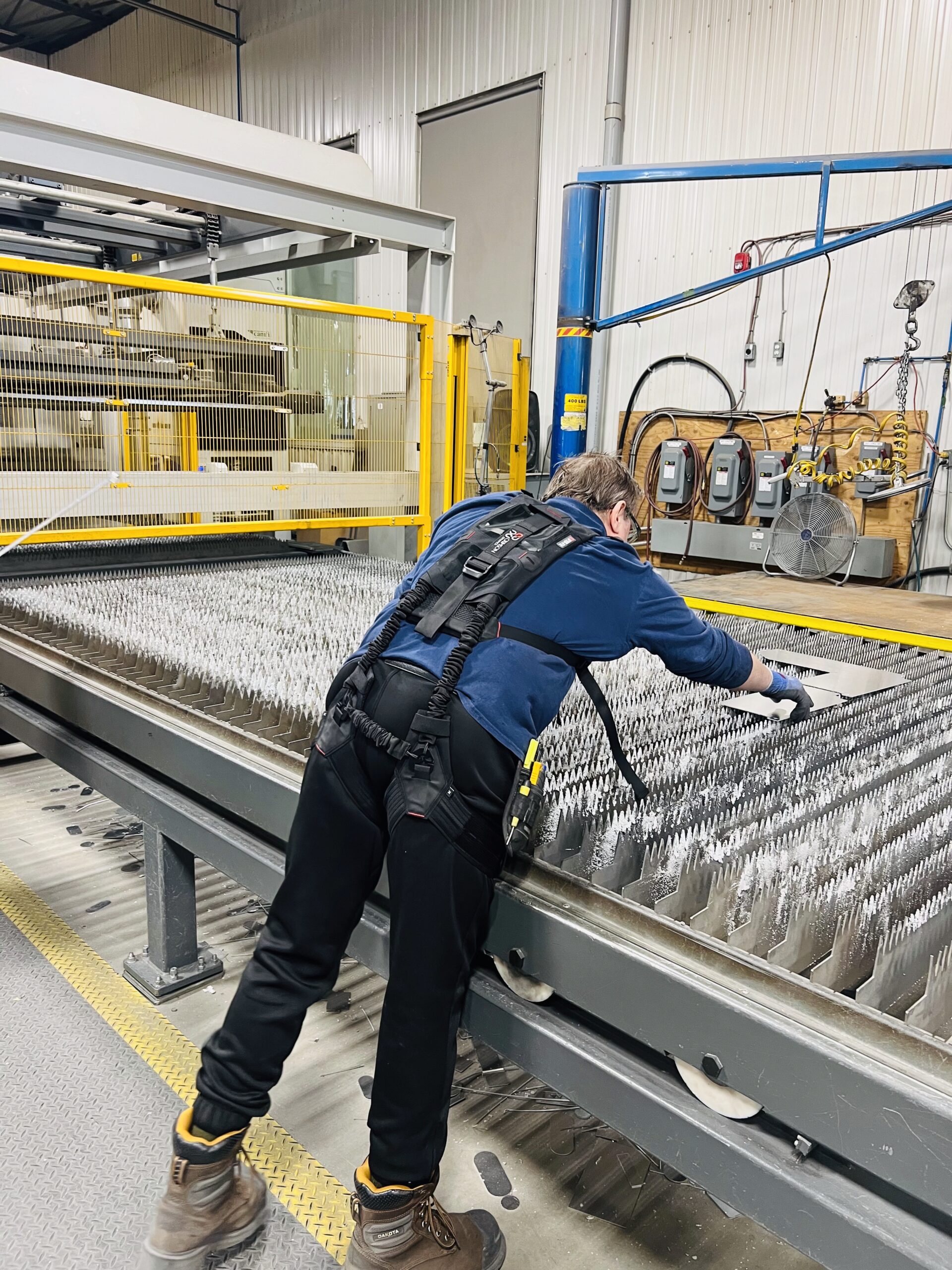
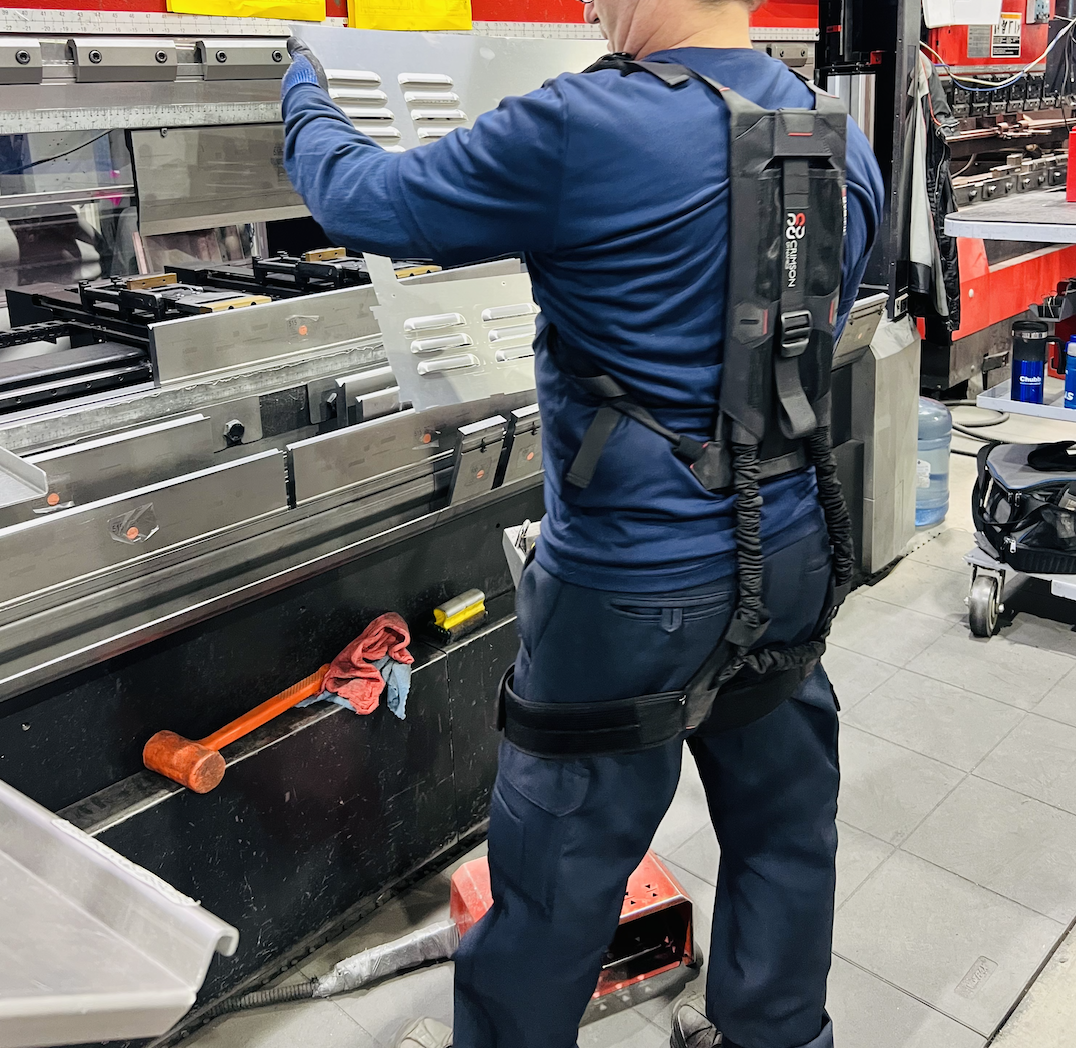
The solution deployed here: the Crimson Fit. It’s the passive lumbar exoskeleton I recommend most often for sustained standing workstations. Lightweight, one-size-fits-all with simple adjustments, it goes on in about 30 seconds. Workers accept it readily because it doesn’t get in the way — and that, discretion, is often the single biggest barrier to real adoption on the shop floor.
The same logic applies to the press brake. Here, the operator handles steel sheet metal throughout the shift — parts that can weigh several kilos, positioned with precision into the machine. The lower back absorbs a continuous load. The Crimson Fit provides steady lumbar support while leaving full freedom of movement for the precise hand work the station demands.
Station 2 — The angle grinder: shoulders running at full capacity
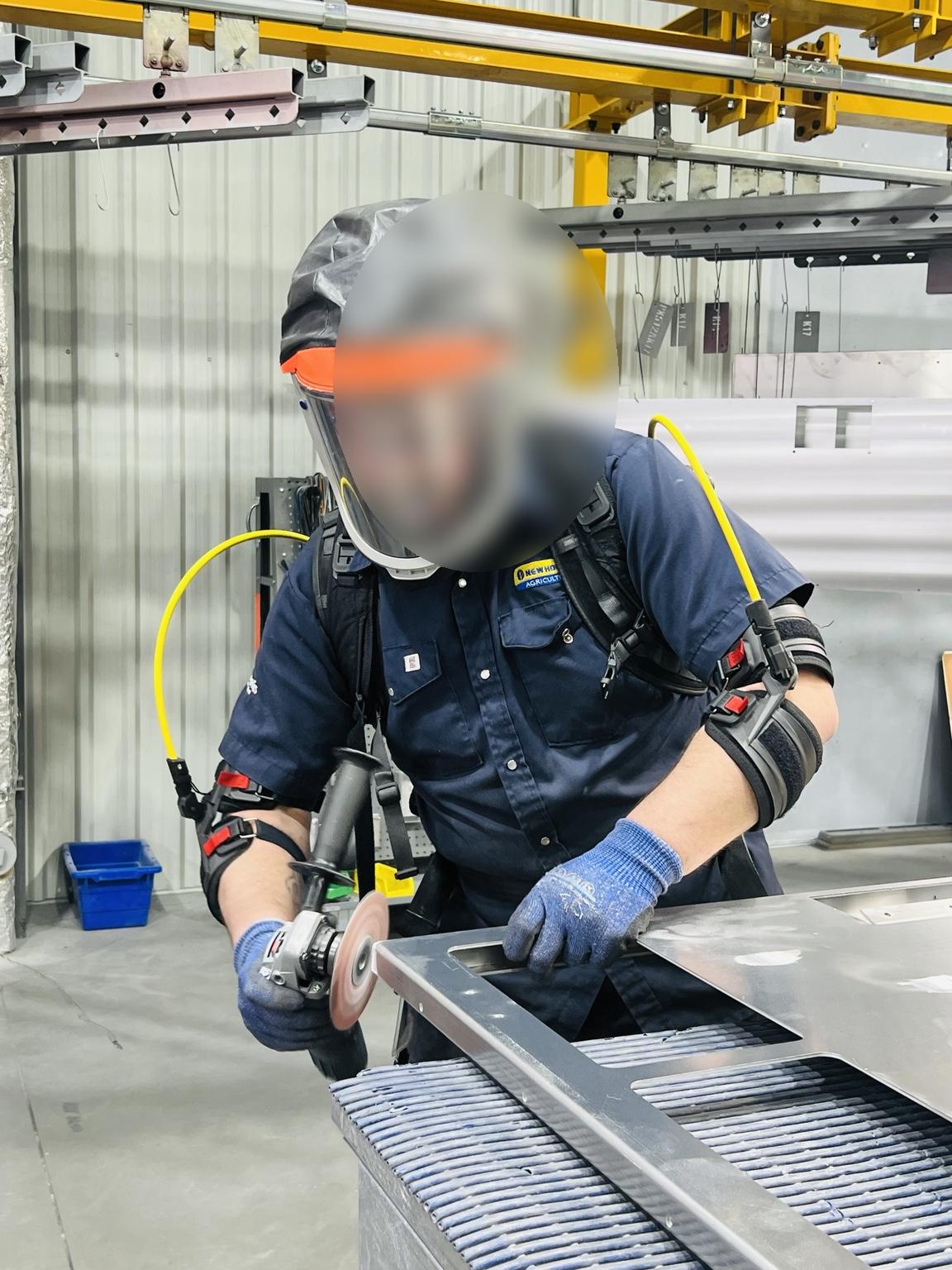
Grinding is a textbook case in industrial ergonomics. The tool is heavy, vibration is constant, and the posture often requires holding the arms elevated or extended for prolonged periods. Over the years, this kind of work generates shoulder pain, tendinitis, and rotator cuff syndromes — injuries that take a long time to heal, are costly to compensate, and often become permanent if nothing is done early enough.
“It’s not a sudden injury. It’s slow wear, motion after motion. By the time the worker starts feeling the pain, the damage is already well established.”
For this station, I recommended the Hapo Front. It’s a unique passive upper-body exoskeleton that measurably reduces the effort on the shoulders during tasks with the arms extended or elevated. The mechanism is both simple and proven: a spring system redistributes the load, relieving the shoulder joint with no motor or battery required. For mid-height work, the Hapo Front is the ideal model.
PPE compatibility: the problem no one talks about enough
This station also gave me a chance to illustrate a challenge I encounter regularly in the field — and one that far too few buyers think about before investing: compatibility between the exoskeleton (optional) and the personal protective equipment (mandatory).
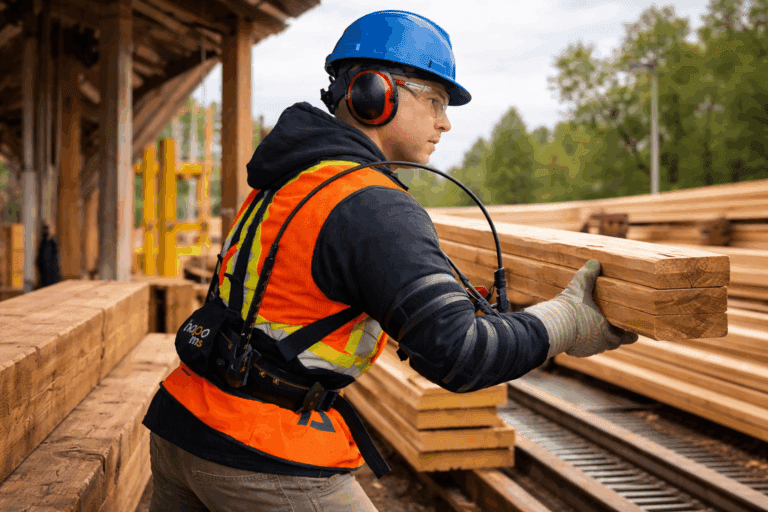
In this plant, grinding generates metal projections and airborne swarf. Operators are therefore required to wear powered air-purifying respirators — the 3M Versaflo, with a head harness, chest straps, and a motor unit on the back to circulate filtered air inside the hood. In many heavy industrial environments, this type of PPE makes it simply impossible to wear a torso or shoulder exoskeleton: straps conflict, the harness gets in the way, and the combination becomes uncomfortable or unsafe.
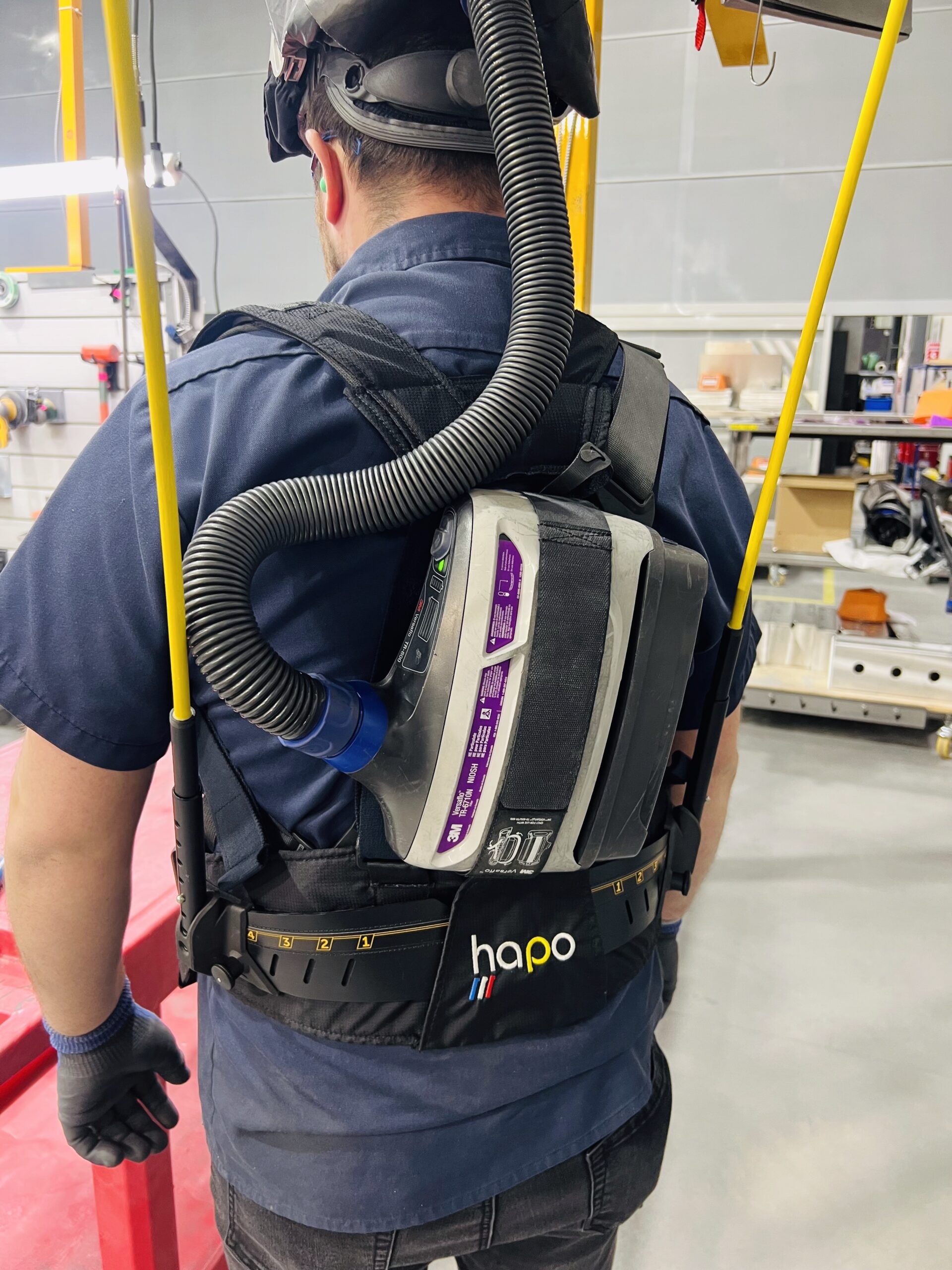
In this specific case, the Hapo Front and the 3M respirator work together perfectly. Both pieces of equipment coexist without interference. That’s good news — but it’s not a given. Which is exactly why the supervised trial in real working conditions, with the full safety equipment of the station, is a non-negotiable step in our integration process. An exoskeleton that forces a worker to remove a regulatory PPE item is not a solution — it’s a new problem.
In heavy industrial environments, mandatory PPE can make certain exoskeletons unusable in practice. The most common conflicts:
- Fall arrest harnesses — chest straps and leg attachments frequently conflict with back and shoulder exoskeletons
- Powered or supplied-air respirators — the back and chest are occupied by the filtration unit and motor
- High-visibility vests — depends on the exoskeleton model, as some strap systems go under the vest
- Heat protection gear — flame-resistant suits and welding aprons can restrict adjustments on an exoskeleton
A supervised trial on the actual workstation, with all PPE worn simultaneously, is the only way to confirm compatibility. That’s what we do systematically before every deployment. Sometimes we’ll also suggest an alternative PPE that we know is compatible with the exoskeleton while providing the same level of protection.
Station 3 — Packing into deep shipping crates: the end-of-line back injury waiting to happen
We talk a lot about fabrication stations. We too often forget what happens at the end of the line. In this plant, finished parts are packed into large wooden shipping crates — deep export crates that require the worker to lean over and reach down to place parts at the bottom. Sometimes several dozen kilos per crate, at a working height that forces a full trunk flexion.
This is exactly the kind of station that slips through superficial audits. The task looks simple, occasional. In reality, it repeats hundreds of times a week — and it’s precisely the type of movement that generates the most severe lumbar injuries: trunk flexion combined with a load, at high frequency, sometimes with an added twist that compounds the risk further.
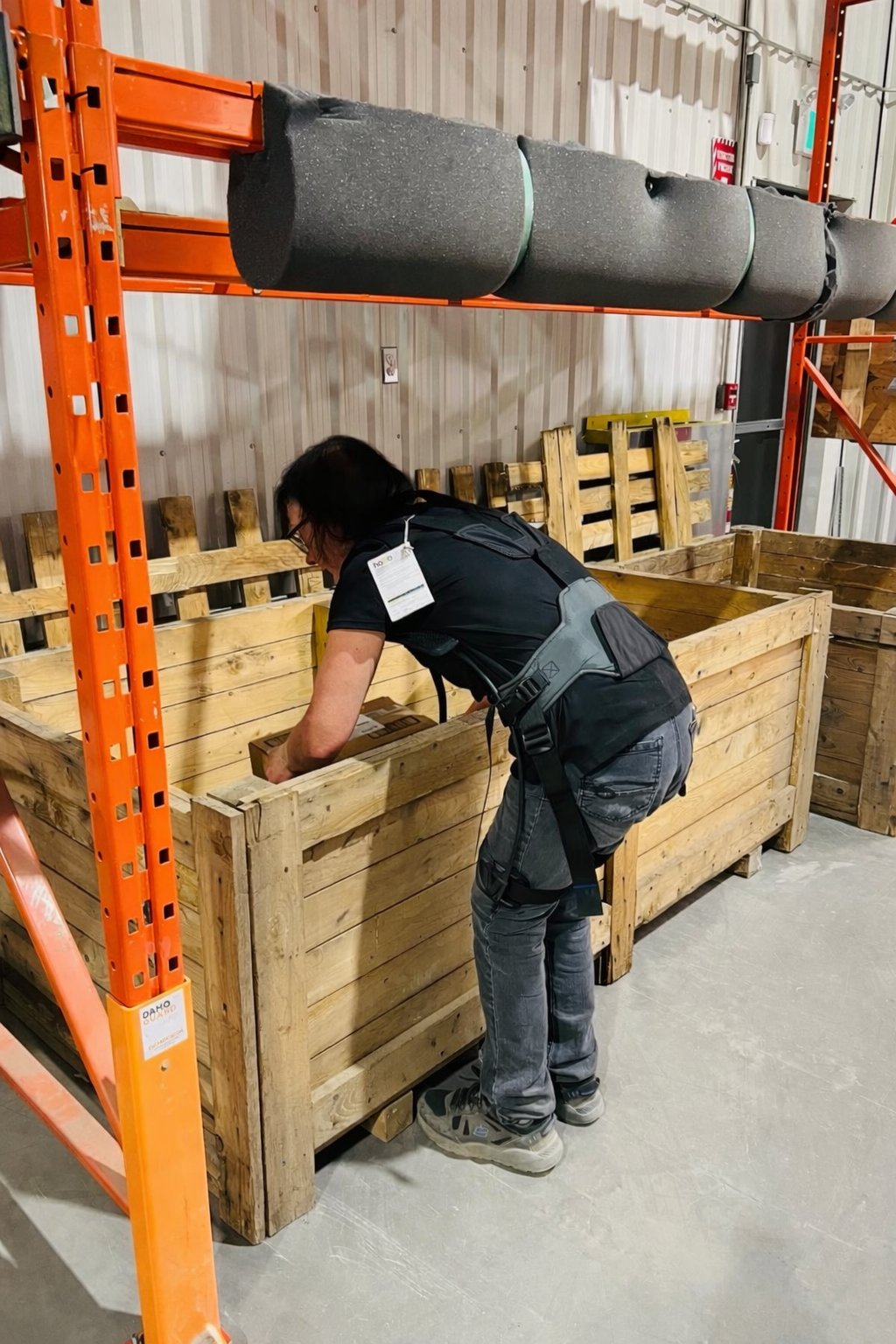
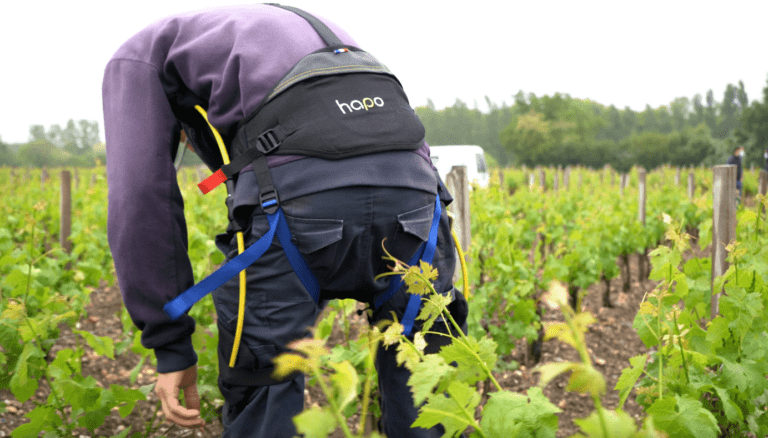
The solution for this station: the Hapo Back. It’s the passive lumbar exoskeleton in the Hapo line, designed specifically for repetitive trunk flexion tasks. It assists the return to upright posture, reduces the load on the spinal discs by close to 30 lbs during the descent phase — exactly what happens when you lean into a deep crate dozens of times a day — and provides postural support through its rigid dorsal plate.
The reality of metal fabrication: bodies that pay the price of production rates
The durable goods manufacturing sector — which includes metal transformation and precision machining — is the second most affected sector for occupational injuries in Quebec, with over 10,000 claims opened at the CNESST in 2024. In British Columbia, musculoskeletal disorders account for approximately 34% of all WorkSafeBC claims, and cost employers more than $2.35 billion in claims over five years. In Ontario, the WSIB records tens of thousands of annual claims from the manufacturing sector alone.
These numbers don’t appear out of nowhere. They’re the direct result of uncorrected postures, repetitive motions accumulated over years, and often a lack of concrete tools to address them. Awareness programs and manual handling training have their place, but they don’t change the biomechanics of a workstation. Industrial exoskeletons do.
Crimson Fit
Ideal for sustained-pace stations: laser cutting, press brake, assembly. One size fits all, simple adjustments, fast adoption by teams.
Passive · LightweightHapo Front
Designed for grinding, spray painting, and mid-height overhead tasks. Compatible with many PPE setups — to be confirmed by supervised trial depending on context.
Passive · Upper BodyHapo Back
Specialized for trunk flexion tasks: crate packing, loading, palletizing, floor-level handling. Offloads the lower back by approximately 30 lbs on every descent and return.
Passive · ~30 lbs assistanceSafeLift — VerveMotion
For intensive material handling workstations. Motorized, with 240 N of assistance and integrated sensors to measure real effort levels by work zone.
Active · MotorizedWhat integration actually changes
I want to come back to a fundamental point, because it’s what sets our approach apart from a standard distributor: choosing an exoskeleton without analyzing the workstation is shooting in the dark. The range of exoskeletons we carry is broad — deliberately so. Because the right exoskeleton for a welder is not the same as for a press brake operator, even if both have back pain. Sometimes two operators at the same machine, with similar builds, won’t prefer the same model. It also depends on their individual feel, past injuries, muscle development — and frankly, personal preference. You can’t argue with that.
In this plant, I ultimately selected three different models for three different stations. A distributor carrying only one or two product lines would likely have sold the same thing across the board — with disappointing results at half the stations, and the very real risk of exoskeletons ending up at the back of a storage room within a few weeks.
“The depth of our product range isn’t a marketing argument. It’s what allows us to find the real solution for each workstation, rather than forcing a workstation into the solution we happen to be selling.”
Every deployment follows the same three steps. First, on-site posture analysis — by eye, and when needed with our AI-powered tool that quantifies joint angles and risk zones by station. Then, a supervised trial in real conditions: your own employees, at their own workstations, with all their safety equipment. Finally, team training and follow-up to ensure adoption is genuine and lasting — not just a pilot that quietly disappears after a few weeks.
That process is what prevents costly mistakes. And in a sector like metal fabrication, where a single WCB claim for a lumbar injury can represent tens of thousands of dollars in compensation, rehabilitation, and workforce replacement, the investment in a properly executed integration pays back quickly.
- Repetitive and predictable workstations — motions are codified, which makes risk identification and model selection straightforward
- Long exposure time — 8-hour shifts, often standing at the same machine, amplify the benefit of a well-chosen exoskeleton
- Experienced workforce worth protecting — skilled operators are hard to replace; protecting their bodies means protecting the company’s institutional knowledge
- Complex PPE environment — an integrator who knows the interactions between exoskeletons and PPE saves you from expensive surprises
- Measurable ROI, quickly — the reduction in WCB claims shows up directly in insurance premiums and replacement costs
If you manage a business in metal transformation, precision machining, boilermaking, or any other area of metal fabrication in Canada, and you’re looking to reduce MSDs in a concrete way — not just check a box in a prevention program — let’s talk. A floor visit costs nothing and changes everything.
Your plant deserves a floor visit
As an exoskeleton integrator, we come to your facility, analyze your workstations, and recommend exactly the right equipment — not the easiest product to sell. Free consultation, no commitment.
Request a free consultation